Medieval Christianity was not built on vague goodwill. It was built on arguments — long, technical, sometimes ugly arguments about who God is, conducted in Greek and Latin in crowded halls, and settled by votes. The seven ecumenical councils are the record of those arguments. They gave the Middle Ages its creeds, its vocabulary for talking about Christ, and a working idea of how the whole church could decide something together. If you want to understand medieval religion, politics, or even the art on a church wall, these seven meetings are the place to begin.
What "Ecumenical" Actually Means
The word comes from the Greek oikoumene, "the inhabited world." An ecumenical council was meant to speak for the whole church, not one province or one faction. In practice, three things had to line up: a Roman emperor convoked it or at least allowed it to happen; bishops from across the Christian world attended or sent representatives; and its decisions were eventually received by the wider church, not merely announced.
That last point matters. Reception was never automatic. Several councils were followed by decades of resistance, and Nicaea II in 787 had to be held a second time because the first session was broken up by soldiers. A council's authority grew over time as churches adopted its language in liturgy, canon law, and preaching.
The Seven Councils, In Order
All seven met in the eastern Mediterranean, in cities that now lie in Turkey. Here they are, with the problem each was called to solve.
- Nicaea I (325) — Arius of Alexandria taught that the Son was a created being. The council answered that he is of one being (homoousios) with the Father.
- Constantinople I (381) — completed the creed's teaching on the Holy Spirit and condemned Apollinarianism.
- Ephesus (431) — Nestorius resisted calling Mary Theotokos, "God-bearer." The council affirmed the title and deposed him.
- Chalcedon (451) — defined Christ as one person in two natures, divine and human, without confusion or separation.
- Constantinople II (553) — a tidying-up under Justinian, condemning the "Three Chapters" to reassure critics of Chalcedon.
- Constantinople III (680–681) — condemned monothelitism, the view that Christ had only a divine will.
- Nicaea II (787) — restored the veneration of icons after the first wave of Byzantine iconoclasm.
Nicaea and the Argument That Would Not Die
Constantine called the first council about a dozen years after he took control of the East, largely because a dispute between Arius, a presbyter in Alexandria, and his bishop had spread through the eastern churches. Somewhere between 250 and 300 bishops came; the traditional figure of 318 is a symbolic number echoing the servants of Abraham. The council produced a short creed and a word — homoousios — that even some of its supporters disliked, because it appears nowhere in Scripture.
The argument did not end in 325. Athanasius, the bishop who defended Nicaea, was exiled five times. Emperors backed rival formulas for the next fifty years. When the dust settled at Constantinople in 381, the creed that churches still recite on Sunday was the result. For medieval Europe, the afterlife of this quarrel was practical: Gothic and Lombard communities arrived with Arian Christianity, and missionaries had to argue the point all over again.
Chalcedon and the Fault Lines It Left
Chalcedon in 451 was the largest of the seven, with several hundred bishops, and the most consequential. It answered a dispute that began when Eutyches of Constantinople pushed the idea that Christ's humanity was swallowed up by his divinity. Pope Leo's letter to the council, known as the Tome, supplied much of the language, and the definition it produced has been the standard for Catholic, Orthodox, and most Protestant churches ever since.
It also split the church. Coptic, Syriac, Armenian, and other churches rejected the definition and are known today as Oriental Orthodox. Much of the disagreement turned on vocabulary: physis, hypostasis, and prosopon do not map cleanly onto Latin or Syriac, and two sides could agree about Christ while disagreeing about which word was safe. Those divisions were not medieval curiosities. They shaped the Middle East, Ethiopia, and Armenia for centuries, and they are still lived realities.
How the Councils Reached the Village
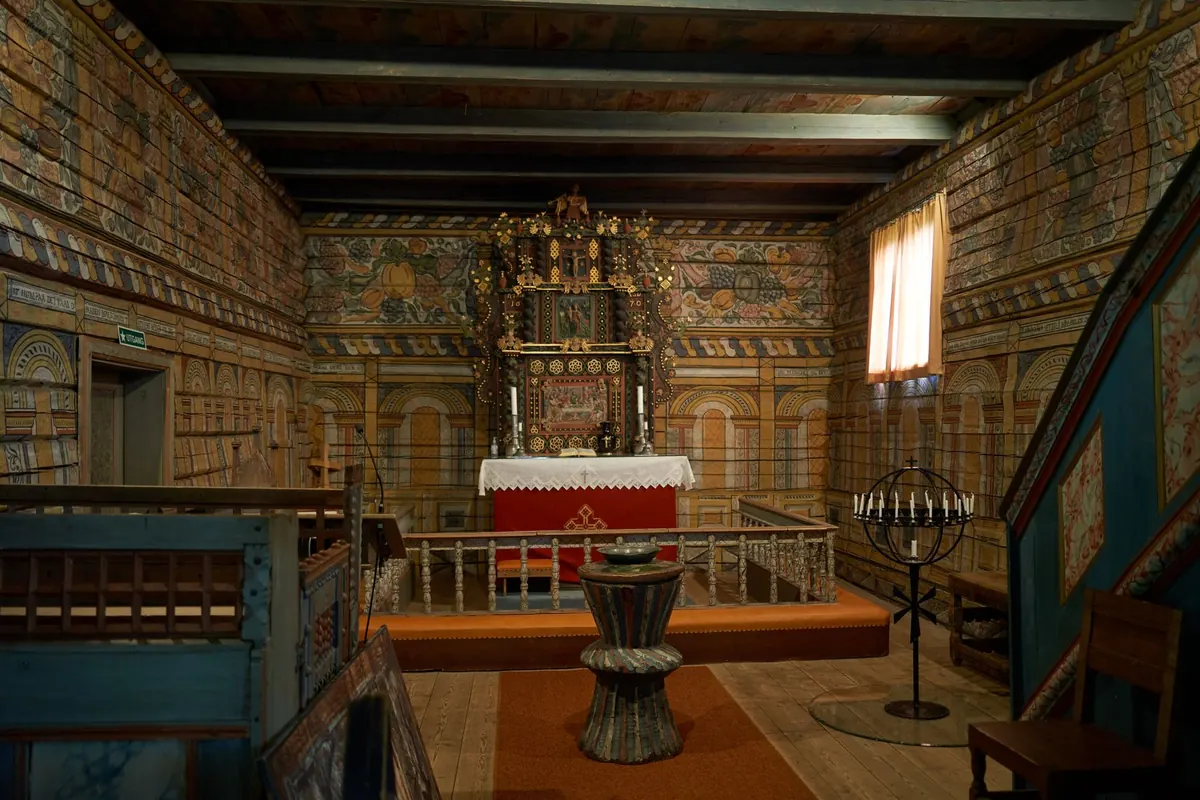
Most people in the Middle Ages never read a council's acts, and few could have followed the Greek. They met the councils anyway, in the creed sung at Mass, in feast days, and in the images on the walls. A Christ shown as Pantocrator, ruling in majesty, is a Chalcedonian statement in paint: fully divine, fully human, one person.
The councils also supplied a model. When the western church faced its own crises, it held great assemblies at the Lateran, Lyon, Vienne, and Constance. The East has never counted those as ecumenical, but they borrowed the form: a summons from secular authority, a roll of decrees, and an appeal to universality. In the fifteenth century, reformers at Constance and Basel argued that such a council outranked the pope — a claim built directly on the prestige of Nicaea and Chalcedon. Canon lawyers, meanwhile, folded conciliar decrees into the collections that governed marriage, clergy discipline, and property, so a fourth-century argument about Greek words ended up deciding who could inherit a manor.
Getting Started Without Drowning
Read the councils as events with politics, weather, and bad tempers, not as abstract theology manuals. A few habits make the material much easier.
- Start with the creeds and the Chalcedonian Definition, which run to a page or two, before touching the acts and letters.
- Learn four Greek terms — ousia, hypostasis, physis, prosopon — and keep your own one-line gloss for each.
- Keep a single-page timeline from 318 to 800 with emperors, popes, and councils in parallel columns; the pattern of imperial involvement becomes obvious fast.
- For each council, ask who convened it, who lost, and how long it took for the decision to stick.
- For the texts themselves, Norman Tanner's two-volume Decrees of the Ecumenical Councils is the standard English collection, and most university libraries hold it.
One last piece of advice: resist the urge to pick a side on your first pass. The councils are the moments when a sprawling, quarrelsome religion agreed on words. Understanding how those words were chosen, and what they cost, is the shortest route into the medieval mind.
Photo: Barnabas Davoti / Pexels